



Women's lifting belt guide: how to choose the right one
A women’s lifting belt is defined as a specialised supportive apparatus worn around the waist to stabilise the core and lower back during heavy compound lifts. The right belt reduces injury risk on squats, deadlifts, and overhead presses by increasing intra-abdominal pressure, which braces the spine under load. Choosing the wrong one, however, means poor support, discomfort, and a belt you simply stop wearing. This women’s lifting belt guide covers fit, material, closure type, and correct use so you can make a confident, informed choice.
How to choose the right size and fit for a women’s lifting belt
Sizing is the single most important decision you will make when selecting a lifting belt for women. A belt that is too loose provides no real support. One that is too tight restricts breathing and prevents you from bracing properly.
Measure your natural waist just above the hip bones using a soft tape measure. Do not use your trouser size as a reference. Clothing sizes vary widely between brands and bear no reliable relationship to your actual waist measurement.
Key sizing considerations for women:
-
Width: A 3–4 inch width is standard for female lifters and provides adequate lumbar coverage without digging into the ribs or hips.
-
Thickness: A belt in the 6–10mm thickness range balances rigidity with comfort. Thicker belts (10mm+) suit competitive powerlifters; thinner options suit general gym training.
-
Anatomical shape: Contoured designs tailored to narrower waists and wider hips reduce pinching and improve comfort during lifts. A straight, uncontoured belt designed for a male torso will gap at the sides and dig into the hip bones.
-
Snugness: The belt should sit firmly against your body but still allow a full, deep breath. If you cannot brace your core outward against the belt, it is too tight.
Pro Tip: Always check the brand-specific sizing chart before ordering. Gunsmithfitness provides detailed measurements for each belt, so use your tape measure result rather than guessing by feel or clothing size.
The best lifting belt for women fits your body, not a generic template. Anatomical fit directly affects whether you wear the belt consistently, and consistent use is what drives real performance improvement.
What materials are best women’s lifting belts made from?
Material determines how a belt feels on day one and how it performs after two years of heavy use. The three main options are leather, nylon, and neoprene, and each suits a different training style.
-
Leather: The most durable option. Leather belts offer firm, rigid support and mould to your body over time. They are the preferred choice for powerlifting and heavy strength work. The trade-off is a break-in period of several weeks before the leather softens and conforms to your shape.
-
Nylon: Lighter and more flexible than leather. Nylon suits dynamic, high-repetition training such as CrossFit-style workouts where you need to move freely between exercises. It does not offer the same level of rigid support as leather under maximum loads.
-
Neoprene: The most comfortable option straight out of the box. Neoprene belts are affordable and suit beginners or those doing moderate-intensity gym sessions. They compress rather than brace, which limits their effectiveness on very heavy lifts.
Construction quality matters as much as material. Look for reinforced stitching, solid rivets, and firm padding at the contact points. Premium belts from specialist makers like Gunsmithfitness use genuine leather with master craftsmen stitching and carry a lifetime warranty. That warranty is a reliable indicator of build quality. A belt that falls apart after six months is not a saving.
For competitive lifters, IPF-approved belts meet strict sizing and material standards required for sanctioned competition. These are almost always leather lever belts. If you plan to compete, verify IPF approval before purchasing.
Which closure type suits women’s lifting belts best?
The closure mechanism affects how quickly you can adjust the belt, how secure it feels under load, and how well it suits your training style. There are three main systems to understand.
| Closure type | Adjustment speed | Security under load | Best suited for |
|---|---|---|---|
| Single prong buckle | Slow | High | General strength training |
| Double prong buckle | Slow | Very high | Powerlifting, maximum loads |
| Lever buckle | Fast | Very high | Competition, frequent transitions |
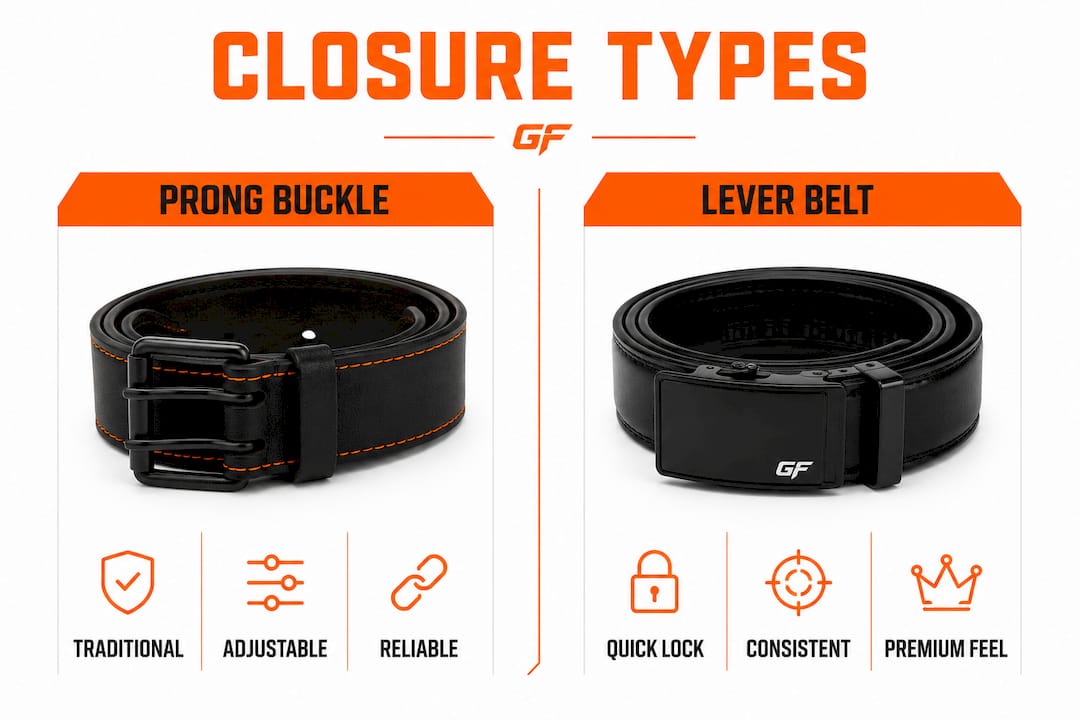
Lever belts allow quick, consistent tightening with a single flip of the lever. This makes them popular in premium models and among lifters who need to adjust tension between sets without wasting time. The lever must be set to your waist measurement using a small screwdriver, but once set, every session is identical.
Prong buckles are traditional and reliable. A single prong offers straightforward adjustment across multiple holes. A double prong provides extra security but takes longer to fasten and unfasten. Both suit lifters who do not need rapid transitions between exercises.
For a deeper breakdown of how each fastening system works, the Gunsmithfitness guide on lever vs prong belts explains the mechanical differences and helps you match the closure to your training goals.
Quick-locking and self-locking buckle systems are also available on some nylon belts. These suit general gym use but rarely offer the same tension consistency as a lever or double prong under maximum load.
When and how to use a lifting belt effectively
A lifting belt provides the most benefit on heavy compound movements where spinal loading is highest. The exercises that warrant belt use are:
-
Heavy back squats at or above 80% of your one-rep maximum.
-
Deadlifts at moderate to heavy loads, particularly conventional and sumo variations.
-
Overhead press with heavy barbells, where lumbar extension is a common compensation.
-
Romanian deadlifts and good mornings when loading is significant.
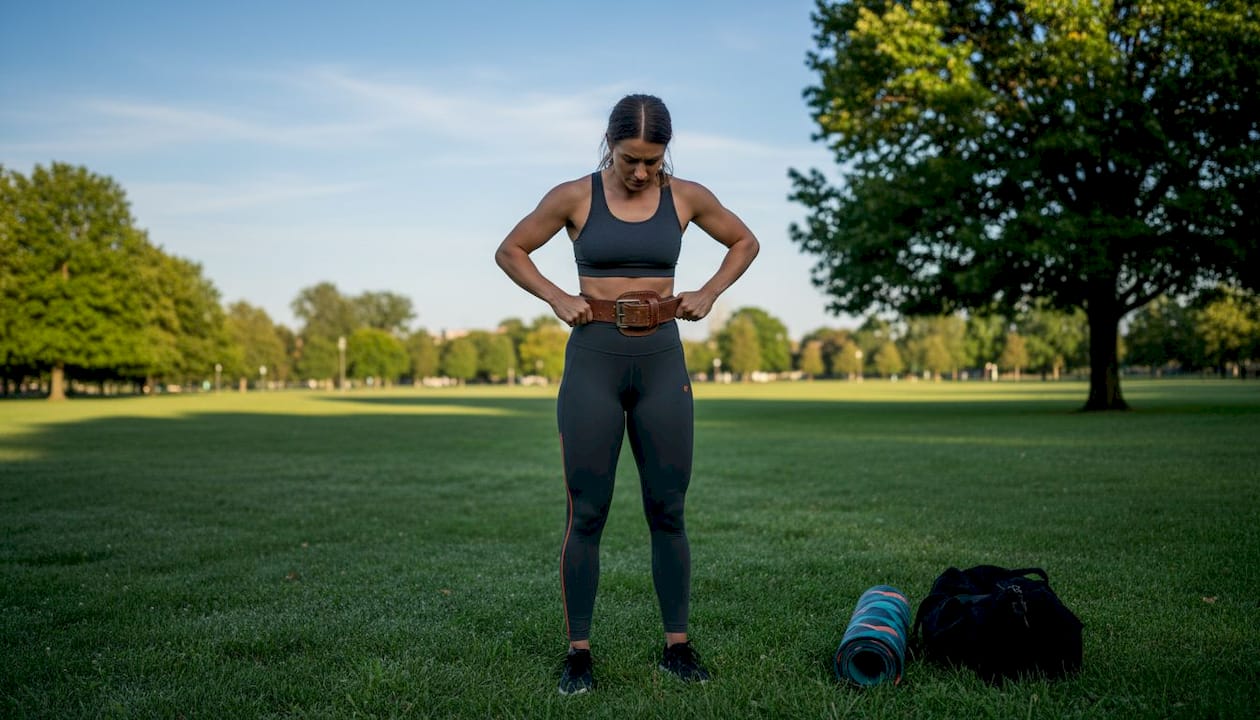
Correct positioning places the belt just above the hip bones with full contact across the lower back and core. The belt should not sit on the hip bones themselves, nor should it ride up into the ribcage. Both positions reduce support and cause discomfort.
Pro Tip: Before each heavy set, take a deep breath into your belly, brace your core outward against the belt, and then initiate the lift. This technique, called the Valsalva manoeuvre, is what creates the intra-abdominal pressure that protects your spine.
Do not wear your belt on warm-up sets, accessory work, or lighter exercises. Your core muscles need direct loading to stay strong. Over-relying on a belt for every set reduces the training stimulus to your intrinsic stabilisers and creates a dependency that weakens you over time.
Leather belt maintenance is straightforward but necessary. Wipe the belt down after each session to remove sweat. Apply a leather conditioner every few months to prevent cracking. Store it flat or rolled, away from direct heat. Nylon and neoprene belts can be wiped clean with a damp cloth. For detailed care advice, Gunsmithfitness covers belt maintenance tips that extend the life of premium leather significantly.
If you are new to belts and unsure whether you need one yet, the Gunsmithfitness article on when to use a lifting belt gives a clear, practical answer based on training stage and load.
Key takeaways
The best lifting belt for women is the one that fits your anatomy, suits your training style, and that you will wear consistently on every heavy set.
| Point | Details |
|---|---|
| Measure before you buy | Use a soft tape measure at the natural waist, above the hips, not your clothing size. |
| Match material to training style | Leather suits powerlifting; nylon suits dynamic training; neoprene suits beginners. |
| Choose the right closure | Lever buckles offer speed and consistency; prong buckles offer reliability at lower cost. |
| Position the belt correctly | Place it just above the hip bones with full contact across the lower back before bracing. |
| Reserve belt use for heavy lifts | Wearing a belt on every set reduces core strength development over time. |
What I have learnt from years of watching women train with belts
The most common mistake I see is women buying a belt based on price alone, then abandoning it after a few sessions because it digs into their hips or gaps at the sides. That is almost always a sizing and shape problem, not a quality problem. A £30 neoprene belt that fits correctly will outperform a £120 leather belt worn incorrectly every single time.
The second mistake is waiting too long to start using a belt. There is a persistent idea that belts are only for elite lifters or that using one is somehow “cheating.” That is simply not true. A belt is a tool, like lifting shoes or chalk. Used correctly on heavy sets, it lets you train harder and recover better.
What has genuinely impressed me over the past few years is how far female-specific belt design has come. Contoured shapes, narrower back panels, and lever systems sized for smaller waists have made a real difference. Women no longer have to make do with scaled-down men’s belts. The gear now exists that is built for how a female body actually moves.
My honest recommendation: prioritise fit and comfort above every other specification. Expert fitness reviewer Lisa Johnson makes the same point clearly. The best belt is the one you will actually wear, session after session, not the one with the most impressive spec sheet.
— Brian
Gunsmithfitness custom lifting belts for women
Gunsmithfitness builds custom leather lifting belts designed with anatomical fit at the centre of every decision. Each belt is crafted by master craftsmen using premium genuine leather, with lever buckle options for fast, consistent tension and a lifetime warranty that backs the build quality.
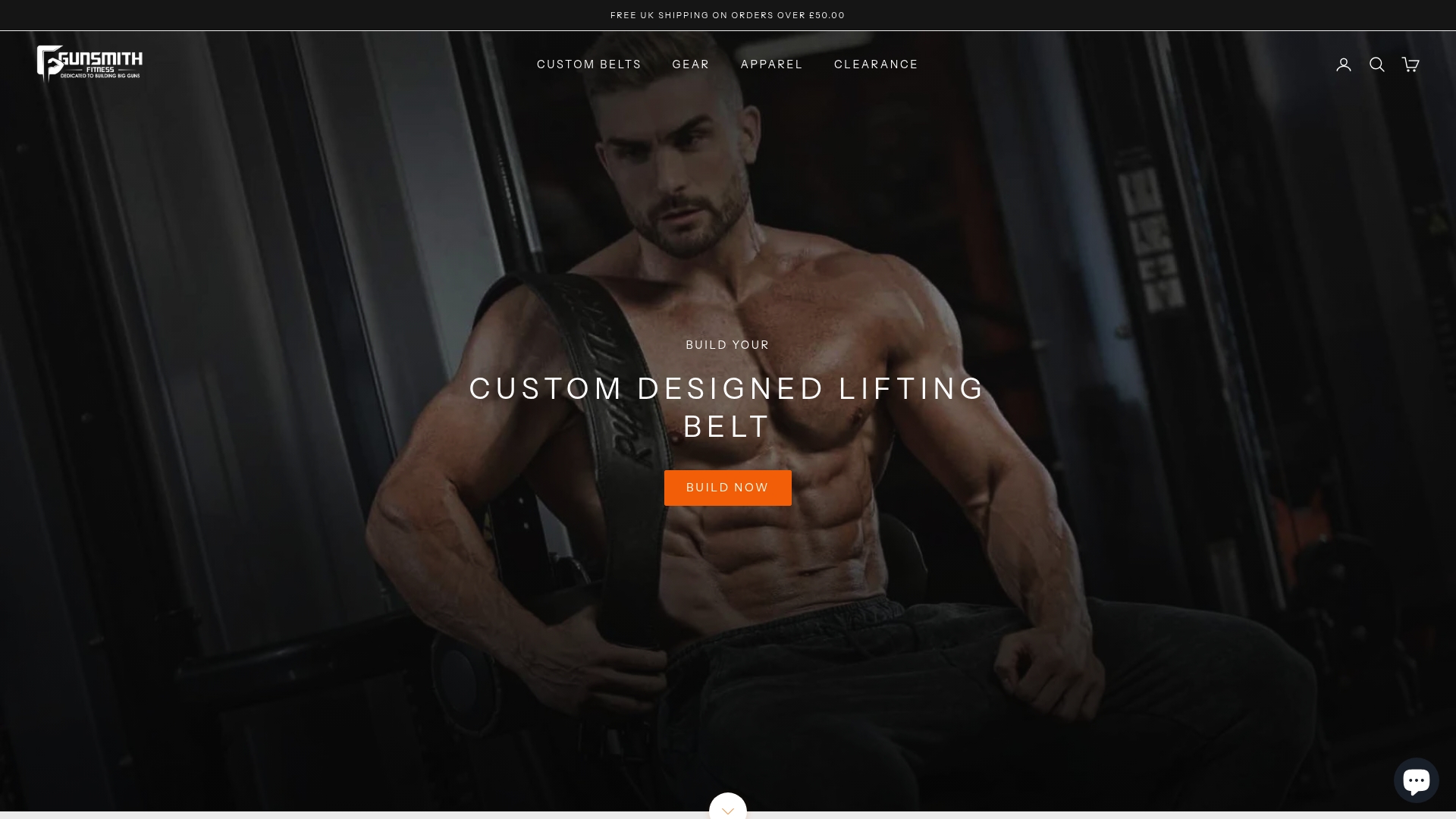
Every belt is made to your exact measurements, which means no compromising on fit and no break-in frustration. You can also choose your colour, finish, and personalisation options so your belt reflects your training identity. For women who take their lifting seriously, this is women’s weightlifting gear built to last a career. Browse the full Gunsmithfitness collection and find the belt that is made for you.
FAQ
What width lifting belt is best for women?
A 3–4 inch wide belt is the standard recommendation for female lifters. It provides sufficient lumbar coverage without restricting hip movement or digging into the ribcage.
How do I measure myself for a women’s lifting belt?
Measure your natural waist just above the hip bones using a soft tape measure. Never use your clothing or trouser size, as these vary too much between brands to give an accurate fit.
Should women use a leather or nylon lifting belt?
Leather suits heavy powerlifting and provides the firmest support, while nylon is better for dynamic or high-repetition training. Your training style is the deciding factor.
When should women start wearing a lifting belt?
A belt is most beneficial on heavy compound lifts at or above 80% of your one-rep maximum. Beginners should build core strength first before relying on a belt regularly.
What is an IPF-approved lifting belt?
An IPF-approved belt meets the International Powerlifting Federation’s strict standards for sizing and materials. Competitive lifters must use an approved belt to be eligible in sanctioned events.
Recommended
Read more

Anime gym clothing: your complete style and performance guide
Discover the best anime gym clothing that blends style and performance. Elevate your workout gear while showcasing your passion for anime!
Read more
How Much Do You Need to Squat Before Wearing a Lifting Belt?
The world of weightlifting is filled with numerous tools and accessories designed to enhance your performance and protect your body from injuries. One such accessory is the lifting belt. But when s...
Read more